
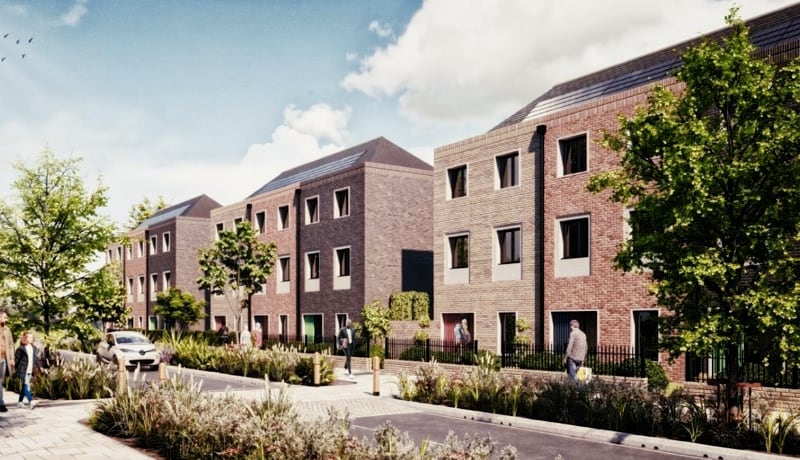
Yet to be built. Family homes at One Horton Heath.
Eastleigh Borough Council’s controversial plans to build a new 3,000-home village off Allington Lane are set to push Eastleigh’s debt to a new historic high.
On Thursday (Dec 21) It’s expected that a committee of councillors will agree to sink an extra £154 million of borrowing into the delayed One Horton Heath mass-housing project (OHH).
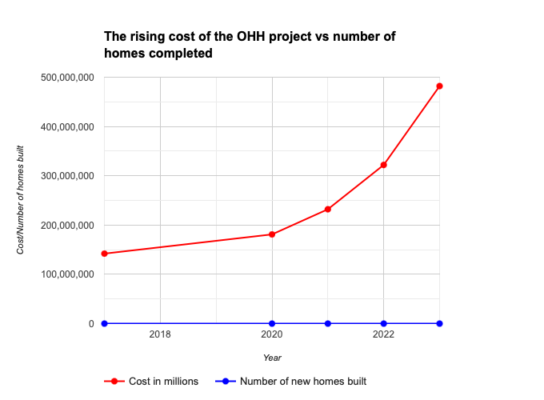
The new money, which comes on top of £322.8 million already approved, would take the total bill for the scheme to £485.4 million. When added to the council’s existing £533 million of borrowing for commercial property, it pushes Eastleigh’s total liabilities through the landmark £1 billion barrier for the first time.
With approximately 60,000 council taxpayers in the borough, that equates to nearly £17,000 of debt per household.
The new funding is expected to cover the cost of building the first tranche of 381 homes and associated infrastructure, and also includes £18 million for a new primary school. However, with over 2,000 more houses scheduled to be built, even more borrowing is likely to be needed.
Although the council is currently paying over £300,000 a month in interest on its OHH existing borrowing, councillors have been telling concerned residents the scheme will be ‘self-funding.’
Build now, pay later.
A council spokesperson explained to Eastleigh News that the interest on the new loan will be capitalised, which means no repayments will be made until the houses have been completed and are achieving a rental income. Interest capitalisation is a common way of funding major construction projects and is how student loans are funded.
Students borrow money but don’t repay anything until the course has completed and they are earning. Although no repayments are made at the outset, the interest due is added to the capital and compounds, so interest is paid on top of interest. While this is a practical way to manage the debt and achieve otherwise unaffordable outcomes, problems arise if there are delays. All the time money is not coming in, interest continues to accrue, and the amount outstanding grows exponentially.
Committee papers show a very low-interest rate of 2.2% for the loan, much lower than the advertised PWLB rates, including the recently introduced gilt-linked HRA rate.
A council spokesperson was very positive about the benefits and prospects, describing how the debt will be repaid gradually as homes are completed and rented out. Homes are built, surpluses would be generated within a few years, and the project would return £194,000 a year from market rent housing by 2028. Although described as a ‘significant income’ by the council, it is a poor return of just 0.04% on a £483 million investment though by the end of the 50-year loan term, all of the debt will be repaid, and the Council will own all of the retained housing outright.
The spokesperson also stressed that the costs of this extra borrowing are not being borne by the council’s other services, nor are those services reliant on income generated by One Horton Heath.
Scope creep
The scope of the project has grown since it first came to the cabinet in 2017. The original plan was for 1,800 new dwellings at a cost of £142 million secured at an interest rate of 1.79%. Back then, the project would return a profit of £11.8 million, a return of almost 8%. But over the last six years, the project has grown to become the biggest mass housing project currently underway in Hampshire, covering a site of 310 acres south of Fair Oak, and when completed, will include a mix of housing types, including affordable housing, family homes, and retirement apartments. There will also be a new local centre, primary school, sports field, and three new commercial hubs. However, although six years have passed since the first round of borrowing was first announced, construction is yet to start
The projected costs have come under fire from opposition members and Eastleigh’s MP Paul Holmes, who has called for an independent review of the initiative. Holmes has even raised his concerns in the House of Commons. But council leader Keith House, has dismissed their criticisms, describing them as ‘nimbyism’ and ‘anti-development.’ He recently assured the BBC that ‘our auditors are all over this.’ However, the council’s external independent auditor informed Eastleigh News that their audit for the year ending March 2022 is still in progress.
